Let us learn about U/I/X/Trim cut winding and

Updated: Apr 12
I used to focus on magnets more than windings.

Hairpin designs changed how I see motor performance.
Let’s break down U/I/X/Trim cut winding.
As a motor designer, I often face design trade-offs.
In one case, we needed higher torque.
But the motor volume could not increase.

The stator slots were already full.
Round wire windings limited copper utilization.
Increasing current created new problems.
Copper losses increased very quickly.
Thermal limits appeared in simulations.
Efficiency targets became harder to achieve.
That is when hairpin windings became interesting.
Hairpin windings use rectangular copper conductors.
Rectangular bars fill stator slots much better.
This improves the slot fill factor significantly.
Hairpin windings can achieve slot fill factors above 70–75%,
while round wires typically stay near 40–50%.
More copper inside the slot reduces resistance.
Lower resistance improves motor efficiency.
But AC losses must be managed carefully
Several pin winding designs are used today. 👇
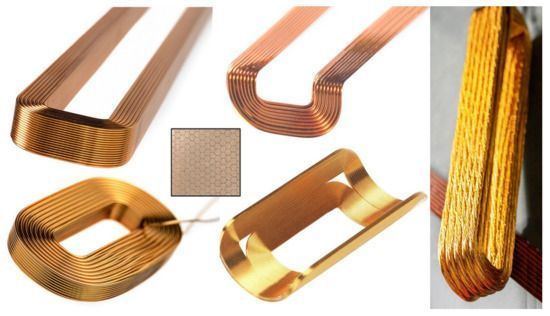
🎯 U-Hairpin winding
Copper bars bend into a “U” shape.
Both ends enter two stator slots.
Ends are welded after insertion.
🎯 I-Pin winding
Straight rectangular copper pins are inserted.
Ends are welded to create phase connections.
🎯 X-Pin winding
Pins cross each other forming “X” joints.
This improves electrical routing between phases.
🎯 Trim-Cut pin winding
Long pins are inserted first.
Extra copper length is later trimmed.
These designs optimize copper inside stator slots.
Performance gains 👍
• Higher torque from better copper packing
• Lower resistance improves efficiency
• Better heat transfer through solid copper
But Hairpin windings require precise laser welding.
Look closely at the end winding region in the images.
That is where laser welding connects the conductors.
Weld quality directly affects electrical resistance.
Poor welds increase heat generation.
They also reduce long-term motor reliability. ⚡

Motor innovation does not always come from magnets or electronics.
Sometimes it comes from how copper fits inside stator slots.
Hairpin windings are a perfect example of this. ⚡
🌟 Do you see hairpins replacing round wire windings?
🧲 What challenges did you face with hairpin windings?
Follow Murali for more EV motor insights ⚡
🔔 Follow me on Linkedin for insights on EV technology, electric motors & Tech.
🔥 Get EV updates directly on WhatsApp – join 600+ engineers: [Click here]
Disclaimer: Images are used only for illustration.
The respective owners hold the copyright to these photos.
Original post on my Linkedin --> Click here


Comments